Home & Health SponsoredMyth vs. fact

Why Your Fiber Powder Might Be Leaving You More Bloated, and 5 Other Gut Myths We Believed for Years

If your kitchen has a drawer of half-used powders, probiotics and gas pills, this one's for you. We went through the clinical research on psyllium, prunes, flax, konjac and probiotics to sort what holds up from what doesn't.
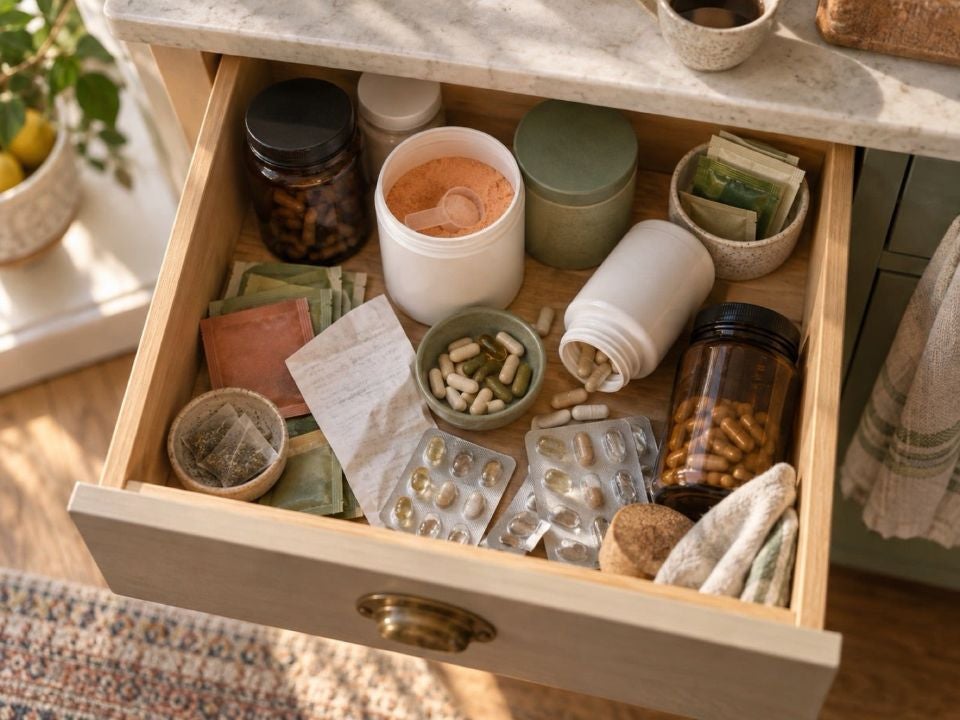
Home & Health, sponsored feature · 5 min read
A kitchen drawer of half-used fiber tubs, probiotics and gas pills
6gut myths

The drawer. Photo is a representation.

Most people who struggle with bloating and irregularity after 50 don't have a willpower problem. They have an information problem.

They've been told to "just add fiber." They've been sold one-job products, one after another. And when the tests came back normal, they were handed a pamphlet about stress.

THE DRAWER, ITEMIZEDITEMJOB IT DOESFiber powderSweep, sometimesProbioticRepairCleansing teaCleanse, harshlyGas pillsNone (masks it)AntacidsNone (masks it)All 3 jobs, every day0 of 3
Every product in the drawer does one job at most. Illustration.

Here are six things almost everyone believes, and what the research actually says.

✕ Myth 1

All fiber works the same way.

✓ Fact

Fibers behave very differently once they're inside you. Some are fermented quickly by gut bacteria, and fermentation is exactly what produces gas. That's why a scoop of the wrong fiber can leave some people more bloated than before.

Psyllium husk works differently. It forms a smooth gel and is fermented very little, which is why researchers describe it as a gel-forming, nonfermented fiber.[16] If a fiber product has made your bloating worse, the problem may be the type of fiber, not fiber itself.

Fast-fermenting fibersfermentation makes gas Gel-forming psylliuma smooth gel, barely fermented
Simplified illustration.
✕ Myth 2

Fiber only helps when you're blocked.

✓ Fact
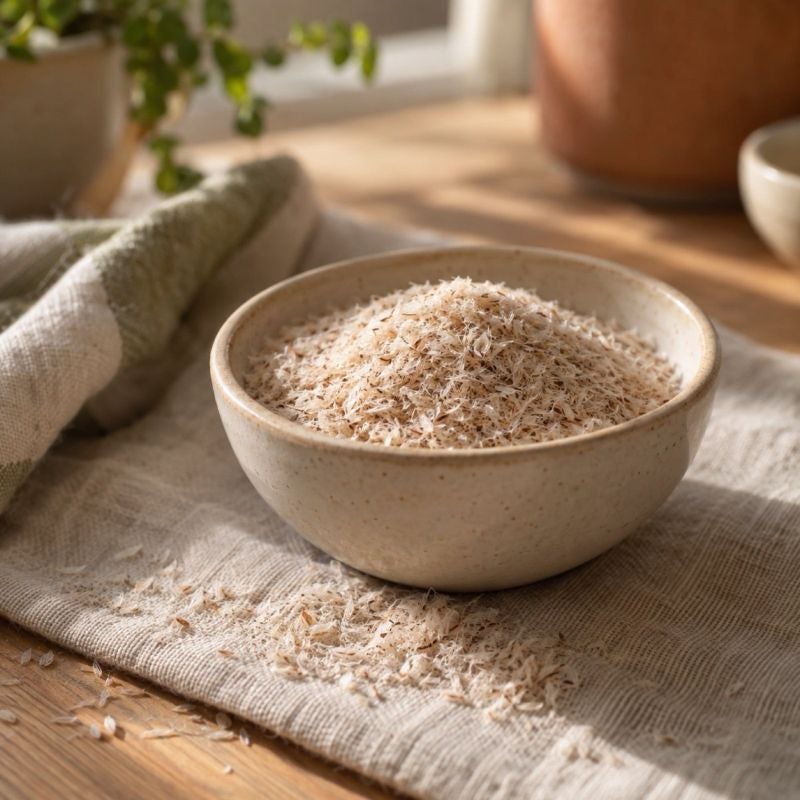
Psyllium husk

Gel-forming psyllium works in both directions. Reviews of the clinical trials describe it helping to soften stool when things are slow and to firm it up when they're too loose.[15][16] It's also one of the most studied fibers for regularity, including in a 2022 analysis of randomized trials.[14]

That matters if your week swings between three quiet days and a sudden sprint. You don't need something that only pushes. You need something that steadies.

✕ Myth 3

Prunes are just an old wives' tale.
✓ Fact
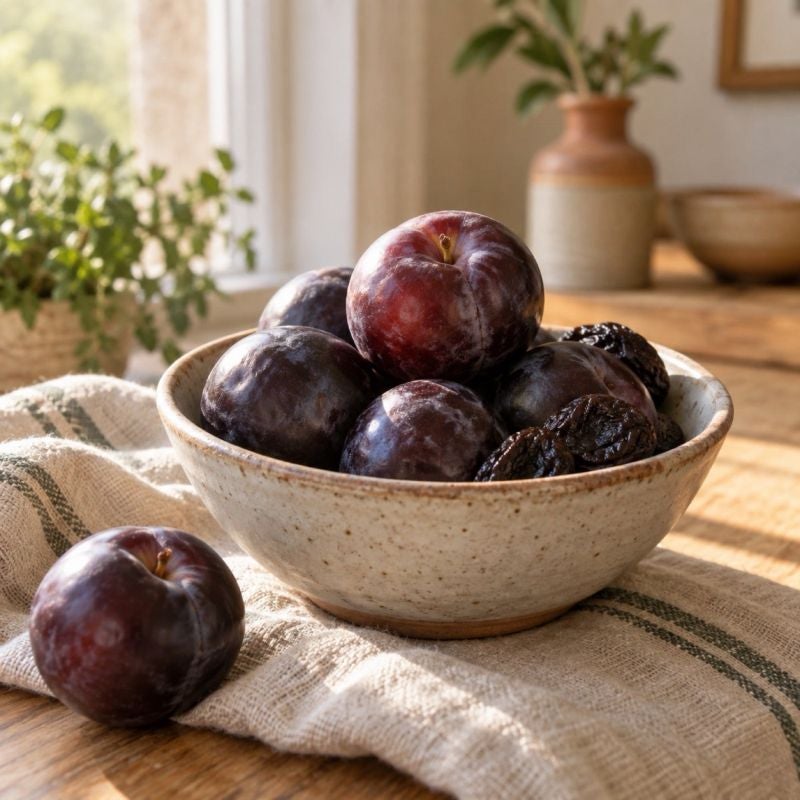
Dried plums
Plumsa 2011 randomized trial
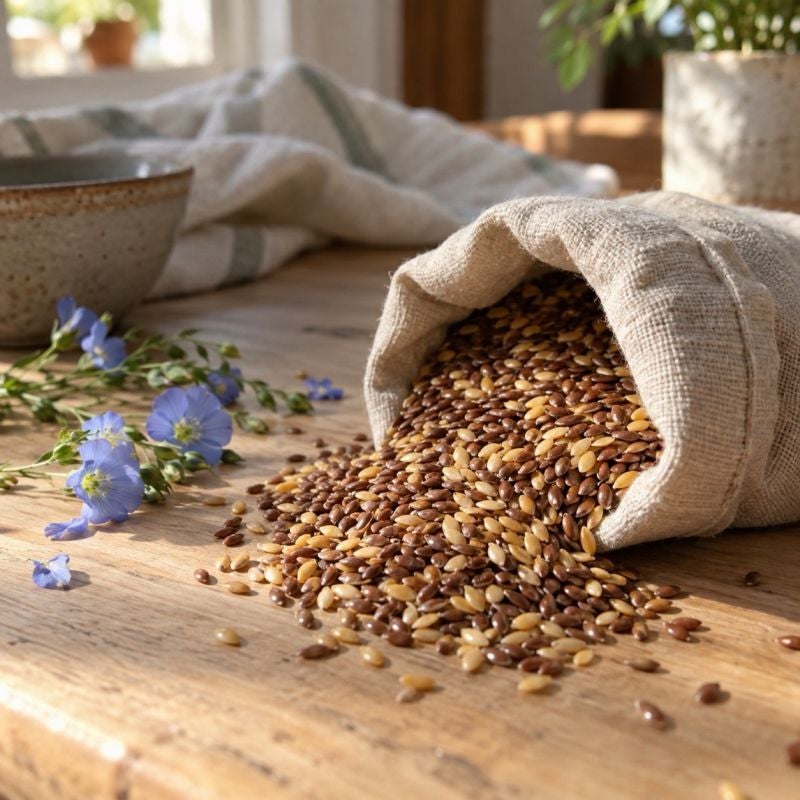
Flax seed
Flaxtwo clinical trials
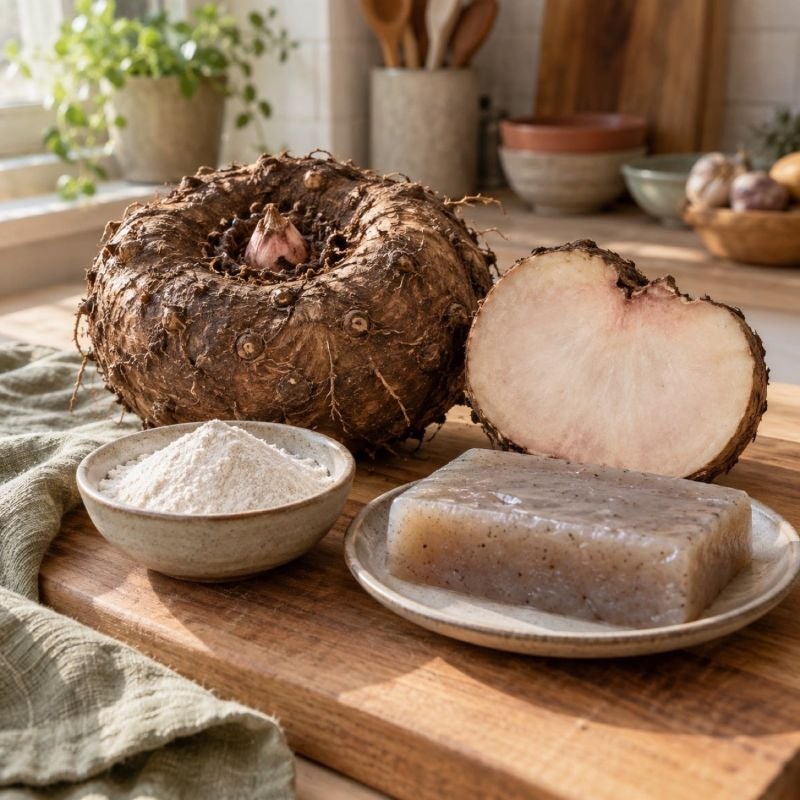
Konjac root
Konjactwo clinical trials

Grandma was onto something. In a randomized trial published in 2011, dried plums came out ahead of psyllium for keeping people regular.[17]

They're not the only kitchen classic with research behind them. Flaxseed and konjac root, the source of a fiber called glucomannan, have been tested in clinical trials for regularity too.[18][19][20][21]

✕ Myth 4

If one probiotic didn't work, the next brand will.

✓ Fact
Probiotic cultures

Specific strains of friendly bacteria, including strains of L. acidophilus, have been studied for everyday digestive comfort.[22][23] But a probiotic only does one job: it repairs.

Moving good bacteria into a gut that's still sluggish and overloaded is like moving new tenants into a house nobody has cleaned. Switching brands doesn't change that. Changing the order does: sweep first, then repair.

✕ Myth 5

A big weekend cleanse will reset everything.

✓ Fact
A weekend cleanseSatSunMonTueWedThuFriA small daily habitSatSunMonTueWedThuFri
Two ways to spend a week. Illustration.

A weekend chained to the bathroom isn't a reset. It's a disruption, and the old pattern often returns within days. Harsh cleanses work against your gut's rhythm instead of with it.

What helps a rhythm is the opposite: something small and gentle, every single day, moving in the same direction your gut already works. Consistency beats intensity.

✕ Myth 6

If your tests are normal, there's nothing you can do.

✓ Fact

Normal results are good news. They mean your doctor has ruled out the serious things, and you should keep up with every screening they recommend.

But "normal" isn't a routine. A blood panel measures your blood. A standard scope looks at the first few feet and the last few feet of a digestive tract that's more than twenty feet long. No standard form asks what forty years of meals have left behind, or what your gut is doing between breakfast and 2 p.m. That part is yours to work on, every morning.

WHERE A STANDARD SCOPE LOOKS Upper scope Colonoscopy first ~3 ftabout 20 feet in betweenlast ~5 ft Simplified, not to exact scale
WHERE A STANDARD SCOPE LOOKS Upper scope Colonoscopy first ~3 ftlast ~5 ft about 20 feet in between Simplified, not to exact scale
Standard upper scopes and colonoscopies examine the two ends. Simplified illustration.

So what does the research add up to?

Put the six facts side by side and a pattern appears. The products in the drawer weren't useless. They were incomplete. Each one did one job, and a steady rhythm needs three:

1. SWEEP2. CLEANSE3. REPAIR collect and carry outkeep it movingrebuild the balance
1. SWEEP2. CLEANSE3. REPAIRcollect, carry outkeep it movingrebuild balance
Fiber powderProbioticCleansing teaThree-job routine
Sweeps with a gel-forming fiberDepends✕✕✓
Keeps things moving, gentlyPartly✕Harsh✓
Helps friendly bacteria✕✓✕✓
Easy to take every dayScoops, sludge✓Not daily✓

That's the logic behind the routine Carol follows now: psyllium husk, oat bran, flax, apple pectin and konjac to sweep; plum and green black walnut hull to keep things moving; and L. acidophilus to repair. Eight ingredients, three jobs, in one capsule with breakfast and a full glass of water.
Psyllium husk
Psyllium huskJob: sweep
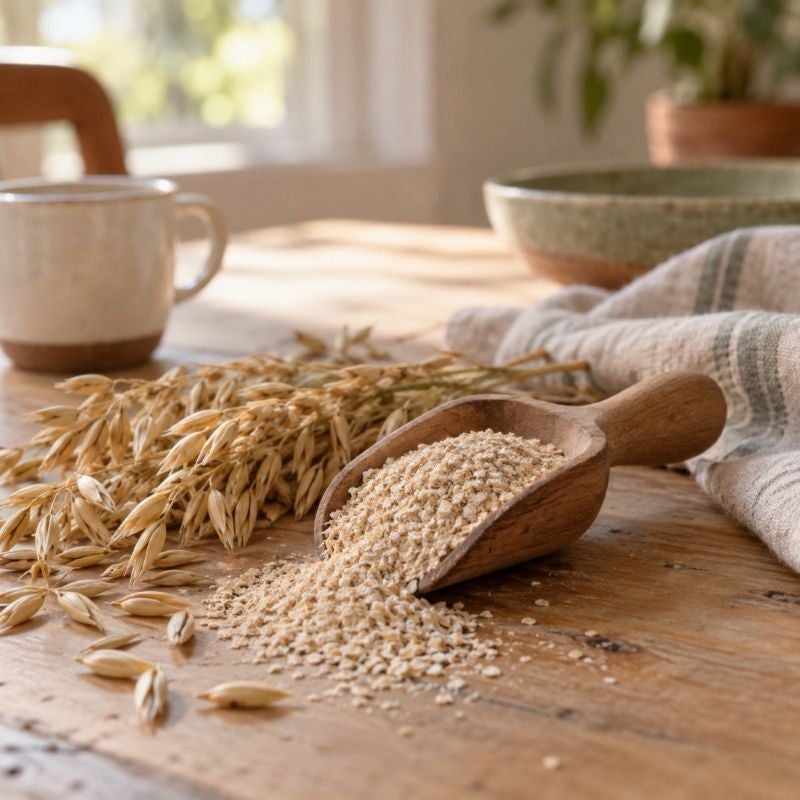
Oat bran
Oat branJob: sweep
Flax seed
Flax seedJob: sweep
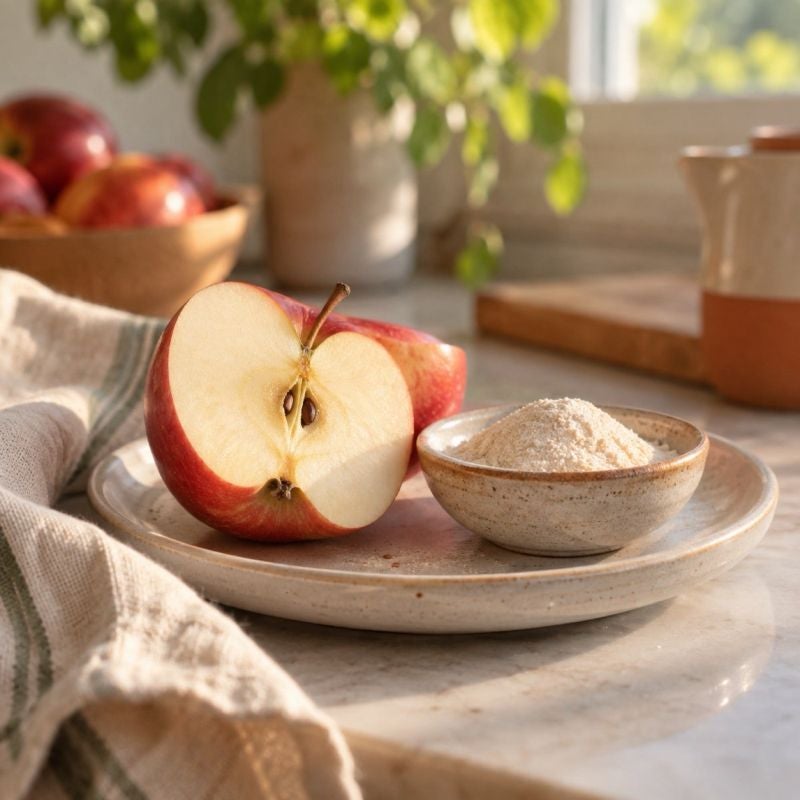
Apple pectin
Apple pectinJob: sweep
Konjac root
Konjac rootJob: sweep
Plum
PlumJob: cleanse
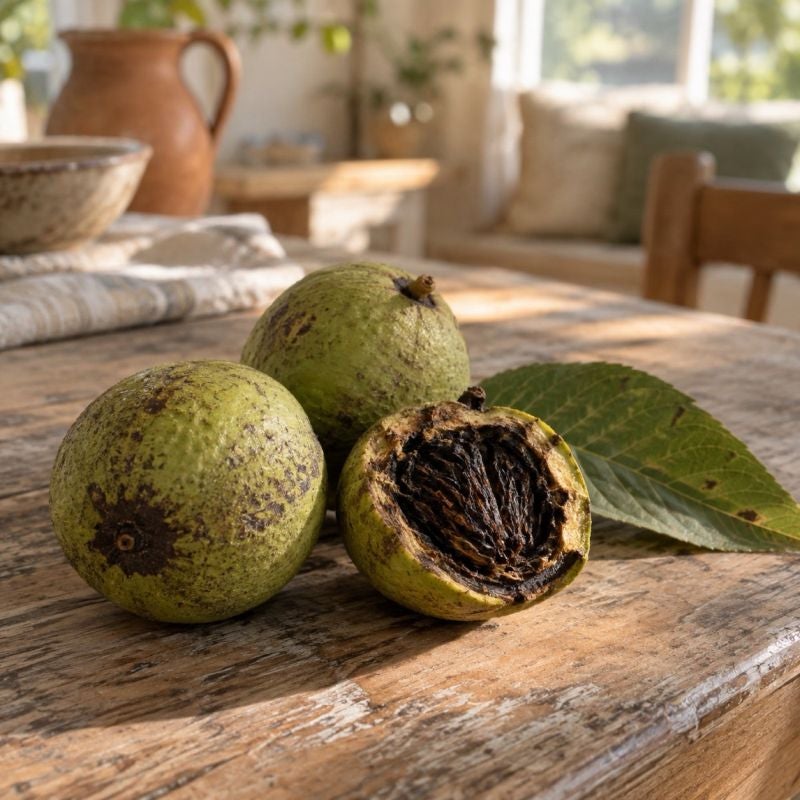
Green black walnut hull
Black walnut hullJob: cleanse
Probiotic cultures
L. acidophilusJob: repair
One capsule and a full glass of water on a kitchen table
One capsule, a full glass of water. Photo is a representation.

The drawer that started it

Carol, 58, spent three years and more than eight hundred dollars on that drawer. Then her daughter Emily asked a question none of those products, or her doctors, ever had: what had she been eating every Friday night for six years?

From that question to the ten-second routine Carol follows every morning now, it is all on the next page.

Carol at breakfast with her morning capsuleCarol's morning routine See what Carol takes

The ingredients, the daily routine and the 60-day money-back guarantee are all on the next page.

This is an advertisement, not a news article. The story of Carol and Emily is a dramatization performed by actors, based on and composited from the experiences of real customers; names and identifying details have been changed. Individual results vary and are not typical. Research cited on this page relates to individual ingredients or to general topics and is not a study of the finished product. These statements have not been evaluated by the Food and Drug Administration. This product is not intended to diagnose, treat, cure, or prevent any disease. Consult your physician before starting any supplement.

Scientific references 32 sources

References relate to individual ingredients or to general research on the topics discussed on this site; they are not studies of the finished product.

  1. CDC. About Diphyllobothrium. Fish tapeworms up to 30 feet; most infections cause no symptoms. cdc.gov
  2. Fiorenza E.A. et al. (2020). Global Change Biology. Meta-analysis: Anisakis abundance rose 283-fold between 1978 and 2015. doi.org
  3. Carmo J. et al. (2017). BMJ Case Reports. Anisakiasis: a growing cause of abdominal pain. pubmed.ncbi.nlm.nih.gov
  4. CDC DPDx. Diphyllobothriasis. Life cycle and transmission via undercooked fish. cdc.gov
  5. CDC DPDx. Anisakiasis. Symptoms often mistaken for other conditions. cdc.gov
  6. StatPearls (2023). Diphyllobothriasis. Worms 2-15 m long, living 20+ years. ncbi.nlm.nih.gov
  7. Sharma K. et al. (2018). Gastroenterology Research. D. latum case report; the worm absorbs about 80% of dietary B12. pmc.ncbi.nlm.nih.gov
  8. Bao M. et al. (2017). Scientific Reports. Anisakiasis highly underreported; model estimate of about 8,000 cases/year in Spain. nature.com
  9. Mattiucci S. et al. (2013). Emerging Infectious Diseases. Gastric anisakiasis often misdiagnosed in Italy. wwwnc.cdc.gov
  10. Sugiyama H. et al. (2022). Emerging Infectious Diseases. About 19,737 anisakiasis cases/year in Japan. wwwnc.cdc.gov
  11. Mazzucco W. et al. (2018). PLOS ONE. Systematic review, 31,701 participants. Anisakis sensitization reported across many population groups. journals.plos.org
  12. Ahmed M. et al. (2016). Cureus. US anisakidosis case; incidence expected to rise with sushi popularity. pmc.ncbi.nlm.nih.gov
  13. Groudan K. et al. (2023). Case Reports in Gastrointestinal Medicine. Gastric anisakiasis masquerading as reflux. pmc.ncbi.nlm.nih.gov
  14. van der Schoot A. et al. (2022). Am J Clin Nutr. Meta-analysis of RCTs. Psyllium and pectin effective for chronic constipation. pmc.ncbi.nlm.nih.gov
  15. McRorie J.W., McKeown N.M. (2017). J Acad Nutr Diet. Review: gel-forming psyllium softens hard stool and firms loose stool. pubmed.ncbi.nlm.nih.gov
  16. McRorie J.W. et al. (2021). Nutrition Today. Clinical review of psyllium benefits. journals.lww.com
  17. Attaluri A. et al. (2011). Aliment Pharmacol Ther. RCT: prunes outperform psyllium for constipation. pubmed.ncbi.nlm.nih.gov
  18. Chen H.L. et al. (2008). J Am Coll Nutr. Konjac glucomannan improves bowel movement in constipated adults. pubmed.ncbi.nlm.nih.gov
  19. Zhu Y. et al. (2025). Eur J Nutr. Double-blind RCT, 48 athletes with functional constipation. Konjac glucomannan improved gastrointestinal symptoms. pubmed.ncbi.nlm.nih.gov
  20. Sun J. et al. (2020). Asia Pac J Clin Nutr. Randomized trial, 90 adults. Flaxseed improves functional constipation. pubmed.ncbi.nlm.nih.gov
  21. Soltanian N., Janghorbani M. (2019). Clin Nutr ESPEN. RCT in adults with type 2 diabetes. Flaxseed and psyllium vs placebo for constipation. pubmed.ncbi.nlm.nih.gov
  22. Ringel-Kulka T. et al. (2011). J Clin Gastroenterol. L. acidophilus NCFM + B. lactis Bi-07 reduce bloating. pubmed.ncbi.nlm.nih.gov
  23. Martoni C.J. et al. (2020). Nutrients. RCT, 330 adults with IBS. L. acidophilus DDS-1 improves abdominal pain and stool consistency. pmc.ncbi.nlm.nih.gov
  24. U.S. FDA. Prescribing information, semaglutide injection 2.4 mg for chronic weight management. Constipation 24% vs 11% on placebo; delays gastric emptying; postmarketing reports of ileus and severe constipation. accessdata.fda.gov
  25. U.S. FDA (2023). Prescribing information, tirzepatide injection for chronic weight management. Constipation 11% to 17% vs 5% on placebo; delays gastric emptying; caution with oral medications. accessdata.fda.gov
  26. Wilding J.P.H. et al. (2021). N Engl J Med. STEP 1: once-weekly semaglutide 2.4 mg; gastrointestinal events more common than with placebo. pubmed.ncbi.nlm.nih.gov
  27. Jastreboff A.M. et al. (2022). N Engl J Med. SURMOUNT-1: once-weekly tirzepatide in adults with obesity; constipation more frequent than with placebo. pubmed.ncbi.nlm.nih.gov
  28. Gorgojo-Martinez J.J. et al. (2023). J Clin Med 12:145. Expert consensus on gastrointestinal side effects of GLP-1 receptor agonists: fluids, fiber and mobility. doi.org
  29. U.S. Department of Agriculture and HHS. Dietary Guidelines for Americans, 2020-2025. Fiber target of 14 g per 1,000 calories. dietaryguidelines.gov
  30. NIDDK, National Institutes of Health. Definition and facts for constipation. About 16 in 100 adults, and about 33 in 100 adults ages 60 and older, have symptoms of constipation. niddk.nih.gov
  31. NIDDK, National Institutes of Health. Symptoms and causes of constipation: low fiber, not enough liquids, little physical activity, aging, certain medicines; warning signs that need a doctor. niddk.nih.gov
  32. Stanford Health Care. Complications of constipation: hemorrhoids, rectal bleeding, anal fissures, rectal prolapse, fecal impaction. stanfordhealthcare.org
Order SupportContact BuyGoods

Villora, Daily Gut Support Complex. BuyGoods is the retailer of this product. Villora is a brand of Gold Angels Agency LLC, 1209 Mountain Road Pl NE Ste R, Albuquerque, NM 87110, USA.