
Bloated by 2 p.m., "normal" on every test, and a kitchen drawer full of things that didn't work.
Her daughter finally asked the question her doctors hadn't: what had she been eating every Friday? Then came the ten-second morning ritual.
Turn the sound on
The video may take up to 10 seconds to load. Please make sure your sound is on.
Choose your Villora supply and lock in the launch price.
One capsule a day. Three jobs done before breakfast is over. Pay once, no subscription, free shipping on 4 and 6 bottles, and 60 days to decide in your own kitchen.
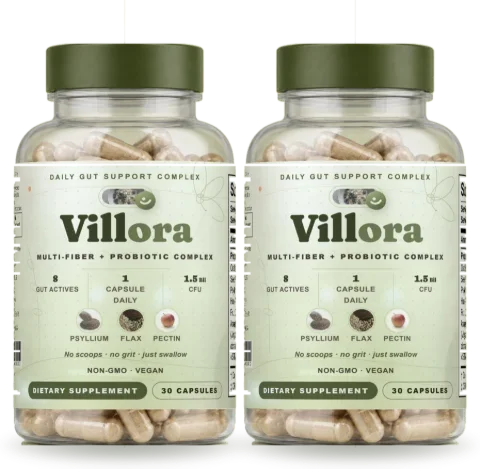
2 bottles
- Total: $138
- + $9.99 shipping
- 60-day money-back guarantee
 Not includedHow to Pick the Perfect Sushi at an All-You-Can-Eat$49 value · with 4 and 6 bottles
 Not includedEating Well, Living Better$49 value · with 4 and 6 bottles
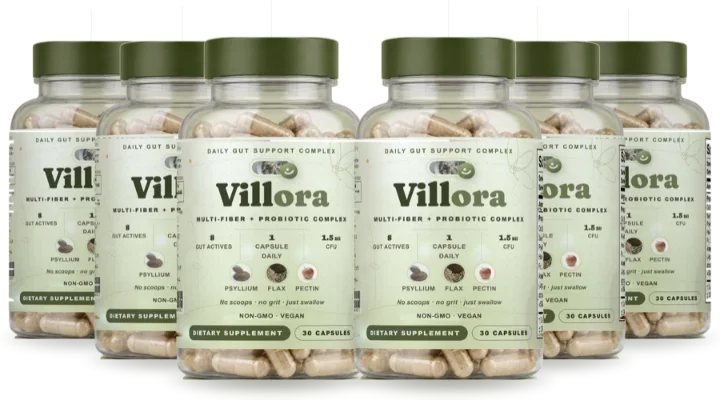
6 bottles
- Total: $294
- FREE shipping
- 60-day money-back guarantee
- About $1.63 a day · never run out
- Free guide 1How to Pick the Perfect Sushi at an All-You-Can-Eat$49 value, included
- Free guide 2Eating Well, Living Better$49 value, included
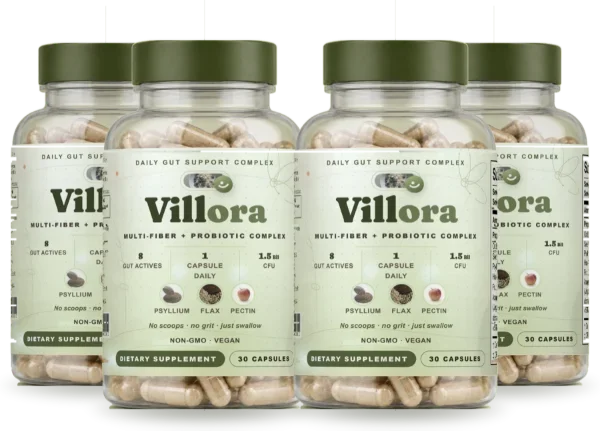
4 bottles
- Total: $236
- FREE shipping
- 60-day money-back guarantee
- About $1.97 a day
- Free guide 1How to Pick the Perfect Sushi at an All-You-Can-Eat$49 value, included
- Free guide 2Eating Well, Living Better$49 value, included







- One-time purchase
- Manufactured in the USA
- Vegan · Non-GMO
- 60-day guarantee
- Free shipping on 4 & 6
- Discreet packaging
Three jobs, one capsule, every morning.
Sweep. Cleanse. Repair. Every morning, in one capsule.
Every product on the shelf does one of these jobs. Villora brings all three together in one daily capsule, in order, before breakfast is over.
- 1Regular. Like clockwork. Six gel-forming fibers support a steady rhythm in both directions: no three-day standoffs, no sprints to the restroom.
- 2A gut that isn't a good place to linger. Green black walnut hull, the botanical four cultures kept on the shelf for exactly this.
- 3The good bacteria, back where they belong. 1.5 billion live cultures of Lactobacillus acidophilus, moving in after the fibers have done their part.
No scoops. No grit. No second capsule at night. Ten seconds with a glass of water, and your gut gets everything the old herbalists gave it, in the order they gave it.
One job each. That's why nothing stuck.
Fiber powder sweeps, then turns to paste in the glass. A probiotic moves good bacteria into a house nobody cleaned. A cleansing tea does one violent weekend and nothing after. None of them does the other two jobs, and none is easy enough to keep doing every single morning. Villora is built to do all three, and to be the one thing you never stop taking.
| All threeVillora | Fiber powder | Probiotic | Cleansing tea | |
|---|---|---|---|---|
| Sweep (fibers) | — | — | ||
| Cleanse (botanical) | — | — | ~ | |
| Repair (probiotic) | — | — | ||
| All three, in order | — | — | — | |
| One step a day | — | — | ||
| No grit, no scoops | — | |||
| Made to keep for months | — | — | — |
Ten seconds. Then breakfast.
Seven bottles a day is a hobby. One capsule is a habit. Villora was designed around the only protocol that works: the one you actually keep.

With a meal.
One capsule with breakfast, or whichever meal you never skip. Same time every day.

With a full glass of water.
Not a sip. The fibers need it to form their gel. This is the one rule.

Then go live your day.
No powder, no timing, nothing at night. Thirty capsules, thirty mornings.
Talk to your doctor first if…
you take medication, are pregnant or nursing, or have a medical condition. Villora is a dietary supplement: fibers, a botanical and a probiotic. Contains tree nuts (walnut). Not for anyone under 18. Never stop a prescription on your own.
Villora is for you if… and not for you if.
For you if
- You're over 50 and your gut has quietly become the thing you plan your days around
- You bloat after meals, swing between backed-up and urgent, and lose the afternoon to a fog
- You've already tried fiber powders, probiotics, teas or diets, and you have the drawer to prove it
- You want one thing to take, once a day, that you'll actually keep taking
Not for you if
- You're looking for a laxative or a weekend cleanse
- You want a diagnosis: Villora is a supplement, not a treatment, and your doctor comes first
- You're under 18, pregnant or nursing, or allergic to tree nuts
- You expect a miracle by Tuesday: this is a routine, and routines take mornings
Read the label. Every ingredient, in plain sight.
Eight ingredients, in order, with the allergen and the warnings in plain sight.

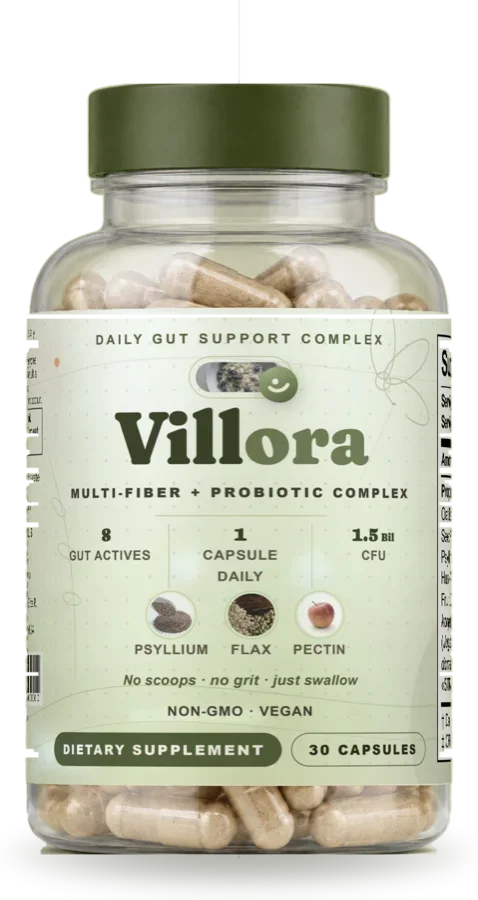
Manufactured in the USA in a GMP-certified facility with domestic and imported ingredients. The fiber blend is proprietary, so the individual amounts within it are not listed. Store below 86°F, away from sunlight. No refrigeration needed.
Eight ingredients. Eight jobs done.
Bought separately, these eight are seven bottles and over $200 a month. Villora puts them in one vegan capsule, manufactured in the USA. Here is what each one does for you every morning.
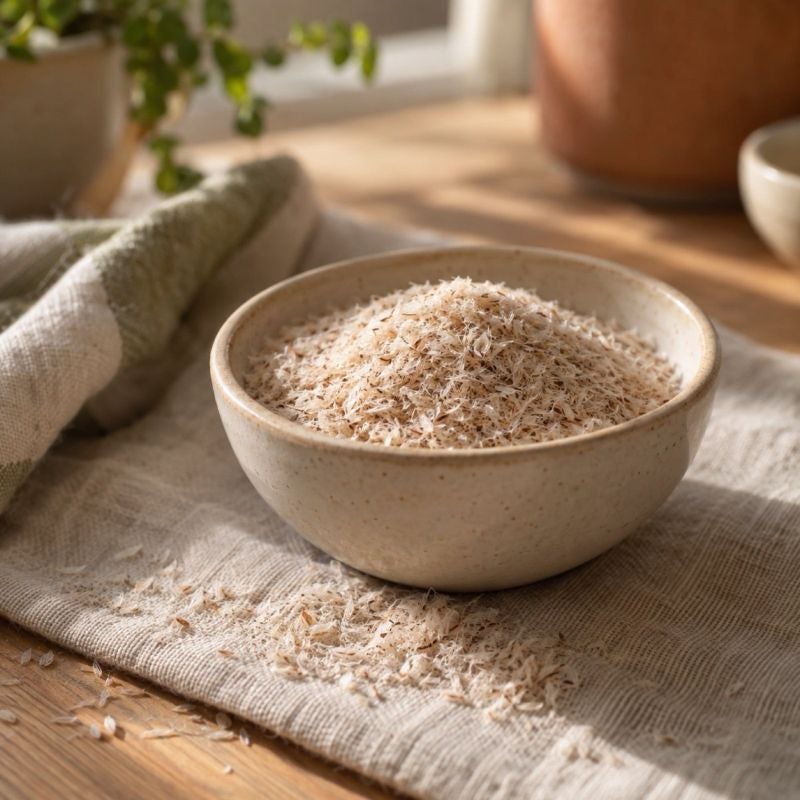
Psyllium husk
One of the most studied fibers on earth for regularity in both directions. It forms a soft gel that moves through the intestines collecting what doesn't belong, softens things when you're backed up and firms them when you're urgent. No more three-day standoffs, no more sprints.

Oat bran
Soft bulk that keeps everything moving on schedule, and food for the friendly bacteria you want to flourish. The oats your grandmother served for a reason, without the bowl.
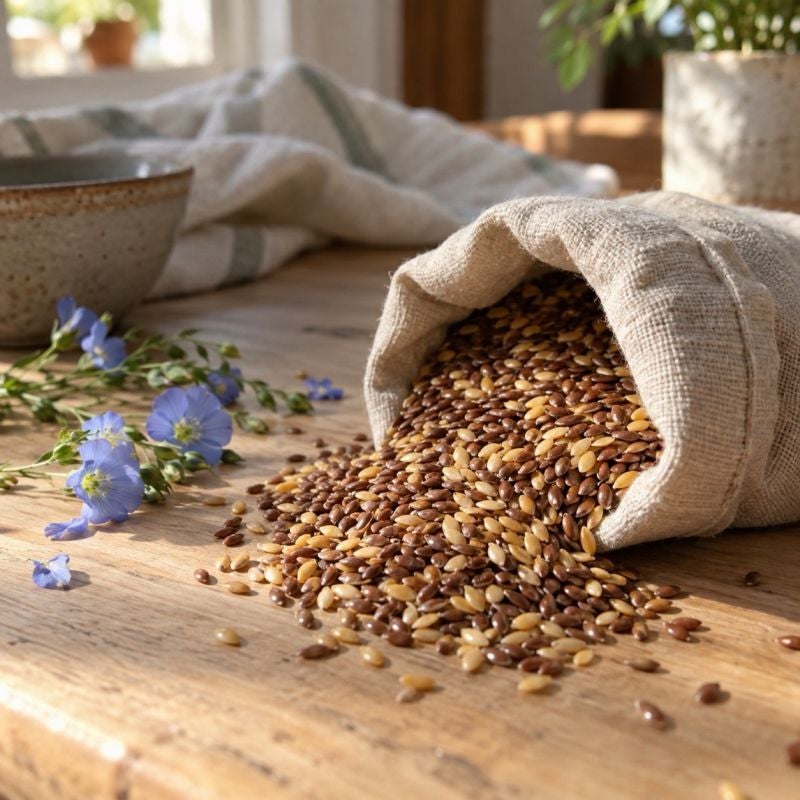
Flax seed
Flax works alongside oat bran: more soft fiber, more fuel for the bacteria that keep a gut balanced, and a gentler passage for everything else. Used in kitchens for two thousand years for exactly this.
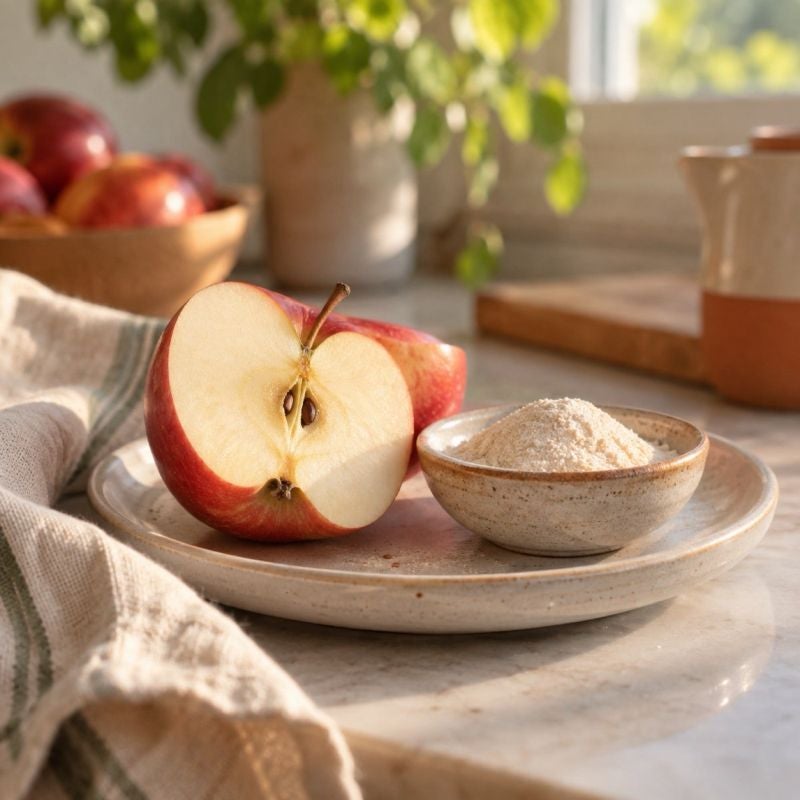
Apple pectin
A gel-forming fiber that binds to residue and buildup as it travels, supporting your body's own elimination and purification processes. It's what makes apples 'clean you out'; here you get the part that matters without the sugar.
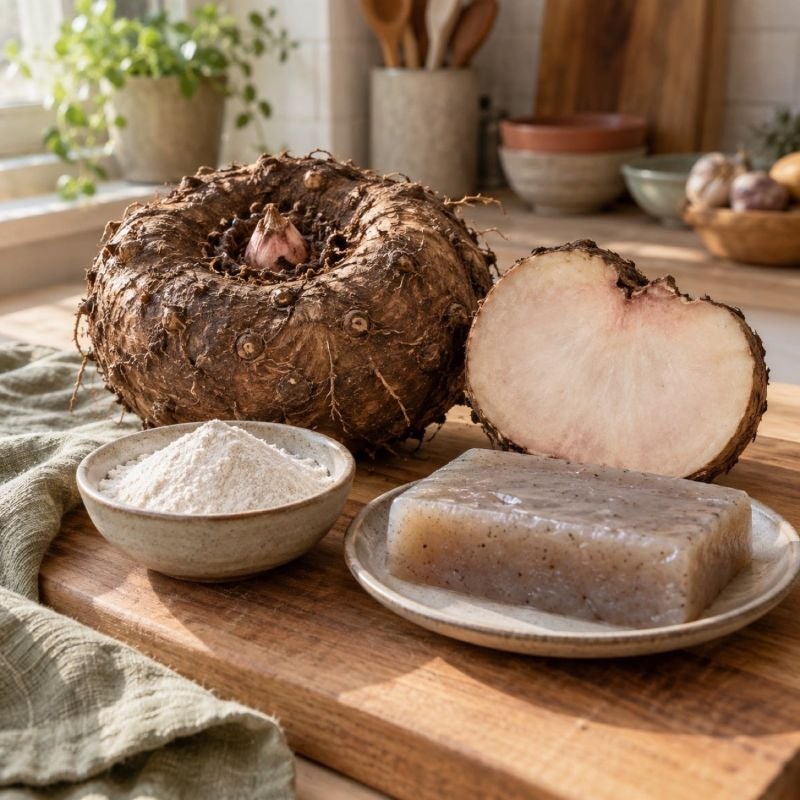
Konjac root
Its glucomannan fiber expands gently with water, helping you feel satisfied while it sweeps the deepest corners of the digestive tract. The reason the full glass of water matters.
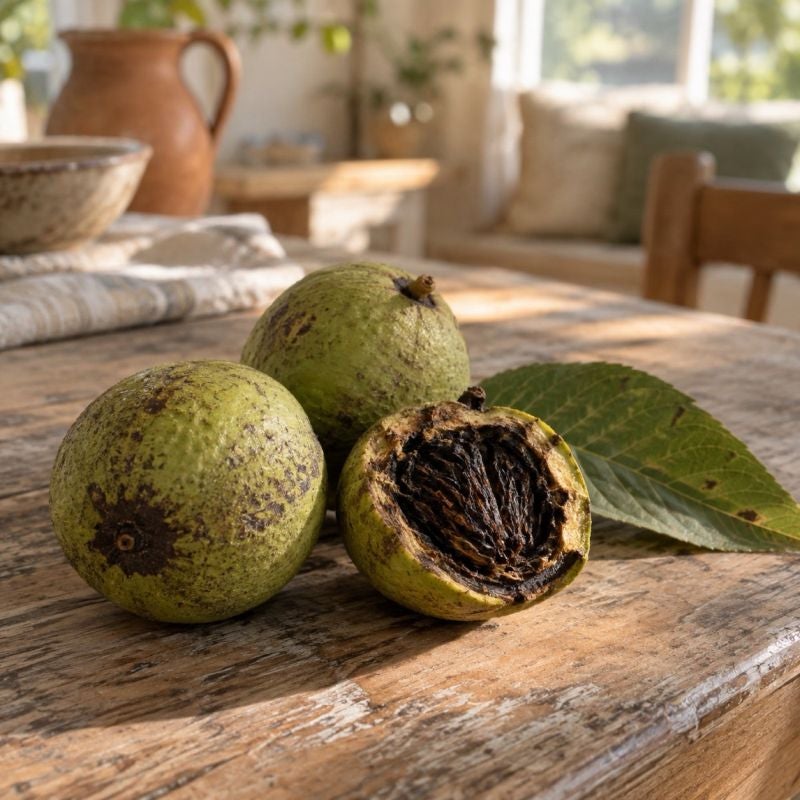
Black walnut hull
The green hull, not the nut. Greeks, Romans, Native American and European herbalists all trusted it for hundreds of years to support a clean internal environment where unwelcome things don't feel at home. Rich in tannins and juglone; gardeners know almost nothing grows under a black walnut tree. Harvested green, in one short window a year.
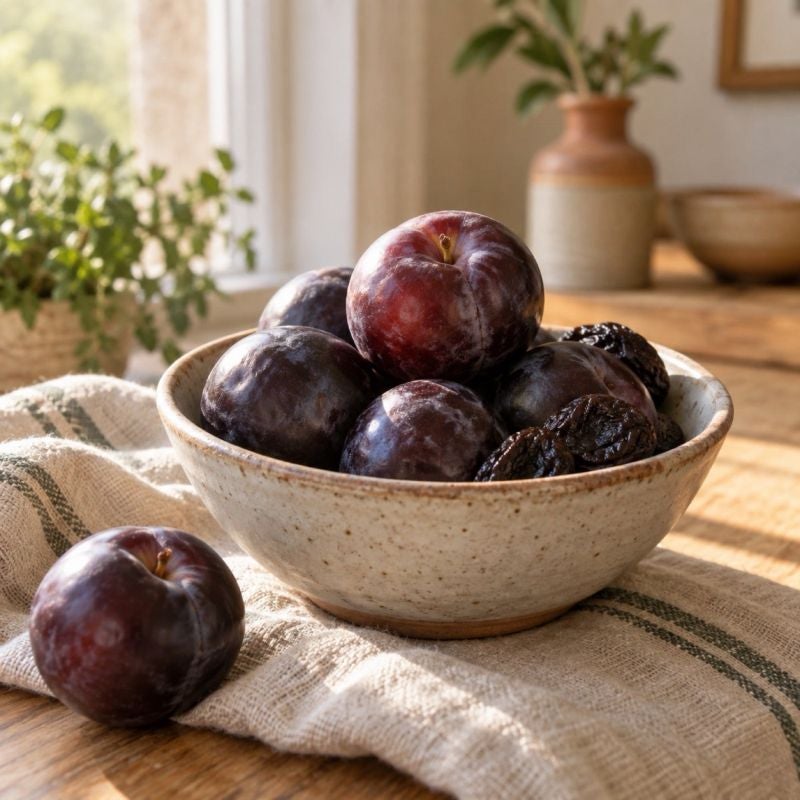
Plum powder
Concentrated plum keeps your natural rhythm gentle and predictable, never harsh, never urgent. The oldest remedy on the list, in a dose you don't have to chew.

Lactobacillus acidophilus
One of the best-known friendly strains, guaranteed at time of manufacture. It moves back into a freshly swept house and supports the balanced gut where bloating and gas simply have less room to happen. The step every fiber powder skips.
What sixty mornings of Villora can change.
Not a miracle by Tuesday. A routine that compounds: mornings first, then afternoons, then the evenings you'd stopped saying yes to.
Regular, on schedule, no drama.
The first thing most people notice. Gel-forming fibers support a rhythm you can count on, so the day starts on your terms.

The 2 p.m. balloon, deflated.
Less bloating after meals means the jeans you put on in the morning are the jeans you're still wearing at dinner.

Dinner with friends, both eyes on the table.
Quieter digestion and a calmer gut mean you order what you want and stay for dessert, without mapping the restroom first.

Clear afternoons.
A balanced gut supports steady energy and focus, so you read the page once and remember it.
Individual results vary and are not typical.
Pick your supply.
Most people choose the 6-bottle routine: one capsule a day for six months, both guides, free shipping, and the lowest price per bottle.
2 bottles
- Total: $138
- + $9.99 shipping
- 60-day money-back guarantee
- Not includedHow to Pick the Perfect Sushi at an All-You-Can-Eat$49 value · with 4 and 6 bottles
- Not includedEating Well, Living Better$49 value · with 4 and 6 bottles
6 bottles
- Total: $294
- FREE shipping
- 60-day money-back guarantee
- About $1.63 a day · never run out
- Free guide 1How to Pick the Perfect Sushi at an All-You-Can-Eat$49 value, included
- Free guide 2Eating Well, Living Better$49 value, included
4 bottles
- Total: $236
- FREE shipping
- 60-day money-back guarantee
- About $1.97 a day
- Free guide 1How to Pick the Perfect Sushi at an All-You-Can-Eat$49 value, included
- Free guide 2Eating Well, Living Better$49 value, included
- One-time purchase
- Manufactured in the USA
- Vegan · Non-GMO
- 60-day guarantee
- Free shipping on 4 & 6
- Discreet packaging
Seven bottles a month, or one capsule a morning.
This is what the Sweep, Cleanse, Repair protocol costs when you build it yourself from the supplement aisle, next to what Villora costs with the 6-bottle package.
- Seven separate bottles to buy, track and reorder
- Fiber powder, capsules, tea: three routines a day
- Guesswork on doses, order and timing
- Over $1,200 for six months
- One bottle a month, all eight ingredients inside
- One capsule with breakfast, ten seconds
- Sweep, Cleanse, Repair already in the right order
- $294 for six months, delivered
Do-it-yourself estimate based on typical retail prices for a psyllium blend, a black walnut hull tincture and a probiotic bought separately.

60 mornings. Lighter, more regular, more like yourself, or your money back.
We take the risk. You take the capsule. Here is the whole procedure:
- Take Villora every morning for up to two months.
- Not for you? Email support@tryvillora.com within 60 days of purchase with your order number. No explanation needed.
- Send the bottles back, even empty, and your full purchase price is refunded within 3–5 business days of receipt. The guides are yours to keep.
No restocking fee, no store credit, no phone call to sit through. You only cover return shipping. Upgrades added at checkout are covered by the same 60 days.
Keep the sushi nights. Lose the heaviness after.
Two digital guides, written for the routine: one for the nights out, one for every other day. Both are yours to keep, whatever you decide about Villora.
How to Pick the Perfect Sushi at an All-You-Can-Eat
Read the restaurant, judge the fish, order with a method.
Nobody is asking you to give up sushi night. This manual shows you how to walk into any buffet and know, before the first plate, which pieces are worth it, which to skip, and how to enjoy the evening without the heaviness afterwards.
- The hidden economics of all-you-can-eat: why the bill is the same for everyone, and who wins
- Choosing the place before you sit down, with the one-page restaurant scorecard
- The rice is king: how to judge a sushi bar in thirty seconds
- The fish: freshness, freezing, cuts, and which pieces to leave under the lamp
- The rule of three waves and the value matrix: order with a method, not by appetite
- Eight mistakes that ruin the meal, and the soy-wasabi-ginger etiquette that matters
- Safety and common sense, plus three ready-made ordering paths and a glossary
Eating Well, Living Better
The complete guide to healthy, balanced and sustainable eating.
The plain companion to the capsule: no rigid meal plans, no counting grams. Principles flexible enough for a busy week, with three kinds of boxes throughout: a practical tip to try right away, a deeper dive, and a common mistake worth avoiding.
- The fundamentals: macronutrients, vitamins and minerals, explained in plain words
- Building a balanced plate, and why hydration is the habit most people skip
- Learning to read food labels, so a proprietary blend never fools you again
- Smart meal prep: planning a week without living in the kitchen
- Mindful eating and the nutrition myths worth busting
- Eating out and social life: how to keep the routine on a Friday night
- A sample balanced week and the checklist of 10 habits to take home
Both guides arrive in your inbox the moment your order is confirmed. Included with the 4- and 6-bottle packages.
Black walnut hulls are picked green, once a year.
The hull only works for us in a short window before it ripens and turns black. Miss it, wait a year. That, and small production runs in the USA, means Villora can't be made on demand: every bottle on this page comes from this season's harvest, and the launch price, $49 to $69 instead of $99, applies to this batch only. When it sells out, the next run waits for the next harvest, at the regular price.
If the one you want still shows as available above, it's yours at the launch price.

From the click to day 60, step by step.
Today
Two minutes on the secure checkout. Your order confirmation and both guides land in your inbox right away.
1–2 days
Your bottles leave our US warehouse in discreet packaging. Tracking number by email.
Day 1
Breakfast, one capsule, a full glass of water. Ten seconds. That's the whole thing.
Weeks 1–4
For many people the bathroom rhythm is the first thing to settle. Keep the water. Keep the morning.
Day 60
You decide. Lighter, more regular, more yourself: keep going. Not for you: one email, send the bottles back, and you get your money back.
Nothing changes, or ten seconds changes everything.
One capsule, a glass of water, breakfast. Three jobs done before you've finished your coffee, every morning, for as long as you want to feel this way.
Choose your package and start tomorrow morning.
Two minutes on the secure checkout. The guides arrive right away, the bottles in 3–5 days, and you have 60 mornings to decide.
2 bottles
- Total: $138
- + $9.99 shipping
- 60-day money-back guarantee
- Not includedHow to Pick the Perfect Sushi at an All-You-Can-Eat$49 value · with 4 and 6 bottles
- Not includedEating Well, Living Better$49 value · with 4 and 6 bottles
6 bottles
- Total: $294
- FREE shipping
- 60-day money-back guarantee
- About $1.63 a day · never run out
- Free guide 1How to Pick the Perfect Sushi at an All-You-Can-Eat$49 value, included
- Free guide 2Eating Well, Living Better$49 value, included
4 bottles
- Total: $236
- FREE shipping
- 60-day money-back guarantee
- About $1.97 a day
- Free guide 1How to Pick the Perfect Sushi at an All-You-Can-Eat$49 value, included
- Free guide 2Eating Well, Living Better$49 value, included
- One-time purchase
- Manufactured in the USA
- Vegan · Non-GMO
- 60-day guarantee
- Free shipping on 4 & 6
- Discreet packaging
The questions people ask.
How do I know it will work for me?
Every gut carries its own history, so nobody can promise you a date. What we can promise is the protocol: three jobs every morning instead of one, and 60 days to judge it in your own kitchen, at our risk.
I've tried fiber. I've tried probiotics. How is this different?
Fiber alone sweeps. A probiotic alone moves good bacteria into a house nobody cleaned. Villora does all three jobs, in order, in one capsule. A mop versus a spring cleaning.
Is it safe with my medications?
Villora is a dietary supplement: fibers, a botanical and a probiotic, vegan and non-GMO. Show the label to your doctor or pharmacist before starting, especially if you take medication, and always take it with a full glass of water. Contains walnut. Never stop a prescription on your own.
How long until I notice something?
Everyone is different. Many people notice their bathroom rhythm change within the first weeks; the lighter belly and the clear afternoons build over the following months. That's why the 4- and 6-bottle packages exist, and why you get two full months to decide.
Why isn't it in stores?
One harvest a year and small batches mean we can't supply chains, and we'd rather put the money into the ingredients than into slotting fees. Selling direct is the only way to keep six months under $300.
Is this a subscription?
No. One purchase, one charge, nothing to cancel. Want more later? Order more.
How does shipping work?
Free on the 4- and 6-bottle packages; $9.99 on the 2-bottle. Orders ship from the USA within 1–2 business days and arrive in 3–5. USA only for now, Alaska and Hawaii included.
Can my husband take it too?
Yes. It's one capsule a day for any adult. The 6-bottle package is the easy way to put two people on the routine without paying twice.
What if it doesn't work for me?
Email support@tryvillora.com within 60 days, send back your bottles (even empty) and get a full refund of your purchase price. Return shipping is the only cost, and the guides are yours to keep.